SOMATIC PRACTICES From Our YOGA Retreat centre on Bowen Island, BC
In December, the forests on Bowen go extra quiet, the understory clears, and what remains in the winter is what holds. Resilience grows when we tell the truth about our year, name what cost us energy, widen our window of tolerance, and practise the skills that shorten our return to baseline. With yoga, breathwork, and reflective writing, we can evaluate honestly and stay with ourselves rather than avoid what is hard.
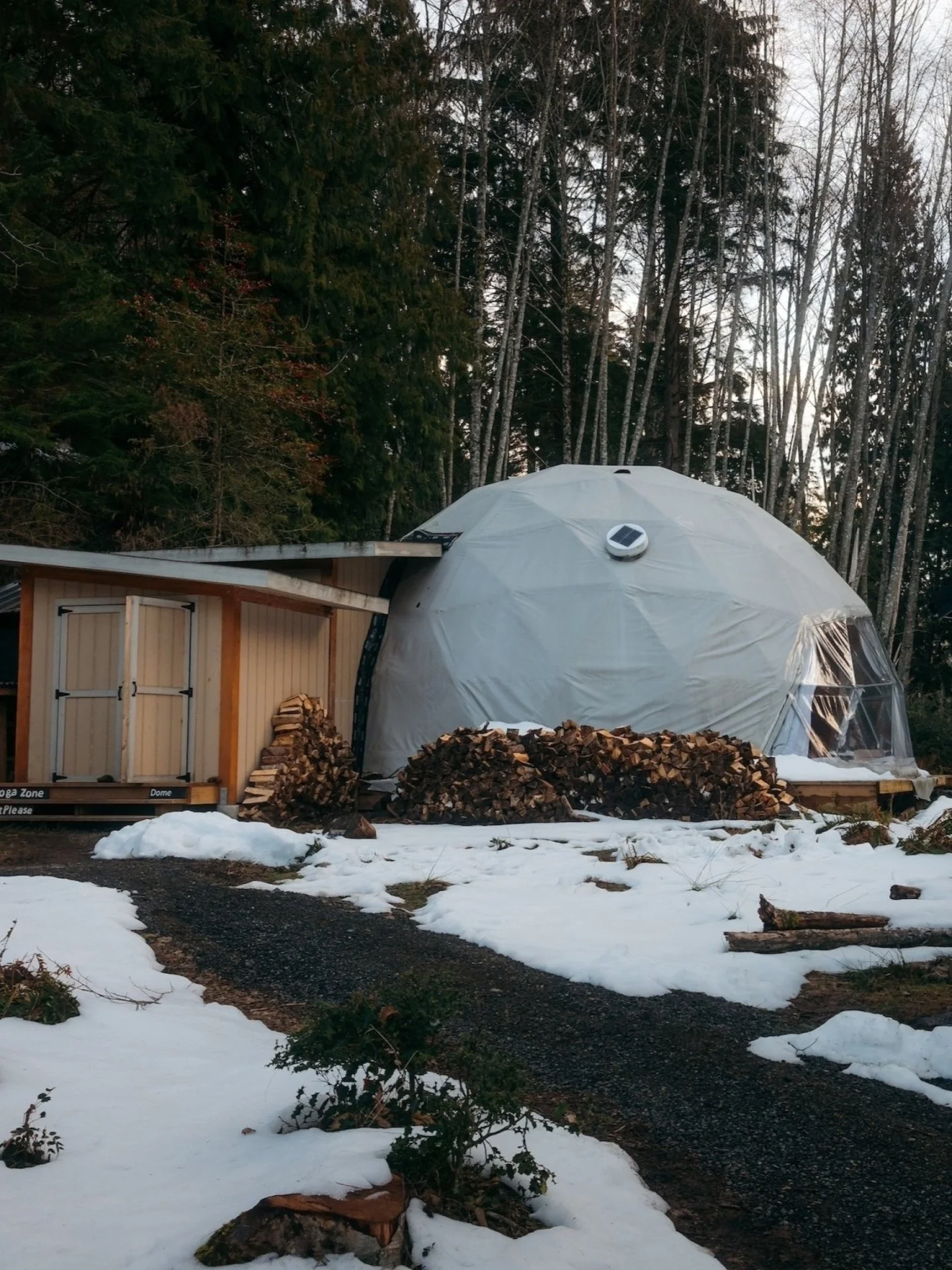
Nectar sits in a temperate rainforest on Bowen Island, a short ferry from Vancouver. Recognized by the New York Times and Condé Nast Traveler as one of the leading wellness retreats in British Columbia, our approach to self accountability is practical and kind. We locate resilience in the body first, then we ask the mind to take responsibility for choices.
What IS Resilience?
Resilience is the capacity to absorb stress, adapt, and recover with minimal collateral damage. In the body, it shows up as three skills working together:
Interoception: your ability to sense inner signals in real time. Heart rate, breath depth, jaw tension, temperature shifts, butterflies in the stomach, among other somatic cues. Better interoception means you notice early signs and can intervene sooner with posture changes, paced breathing, or another actionable.
Vagal braking: the parasympathetic brake the vagus nerve applies to the heart and stress response. A stronger brake helps you downshift after activation. You feel this as a quicker settle, warmer hands, and steadier attention. Long, slow exhales, gentle ujjayi, humming, and nasal breathing all support vagal tone.
Return to steady breath: your speed of recovery back to a calm, even respiratory rhythm. Signs include a softer belly, unclenched jaw, shoulders releasing down, and the ability to speak in full sentences without rushing. Aim for a smooth inhale and a slightly longer exhale through the nose.
In behaviour, resilience is keeping small agreements with yourself when things are messy. Choose commitments you’ll honour even on shaky days: five slow breaths before a tense reply; a daily Supported Bridge Pose (see below); staying curious and asking for clarification rather than defaulting to defensiveness; speaking plainly when you advocate; lights out at a set time. Kept agreements reduce spillover into sleep, relationships, and work, and rebuild trust in your word.
Resilience is body literacy, timely regulation, and consistent follow-through. It is intent paired with impact. Intent without impact is performance; impact without intent can feel harsh.
This month’s sequence pairs simple postures with measurable breath and a short writing practice. The aim is to leave each session with one small promise you can keep next week.
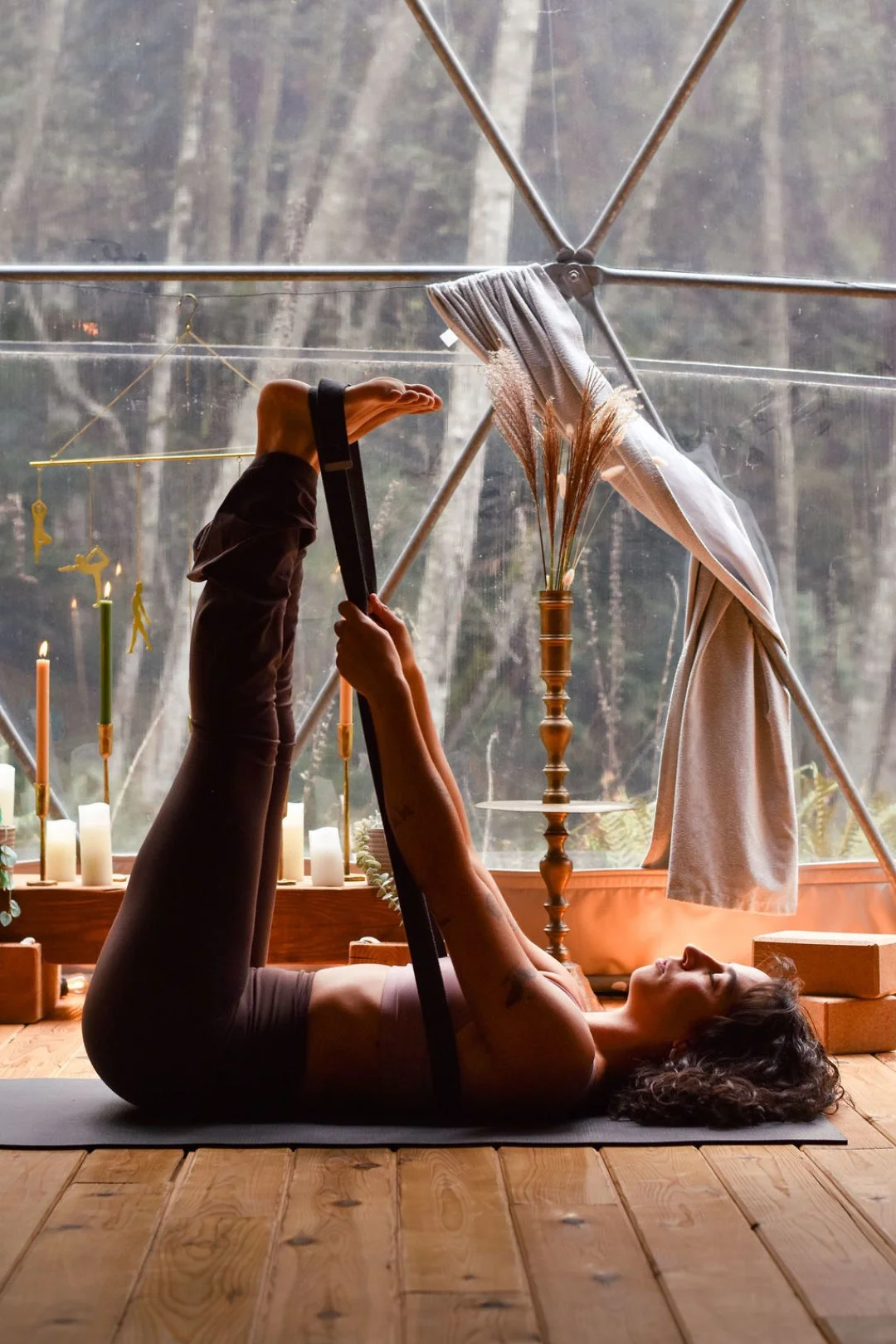
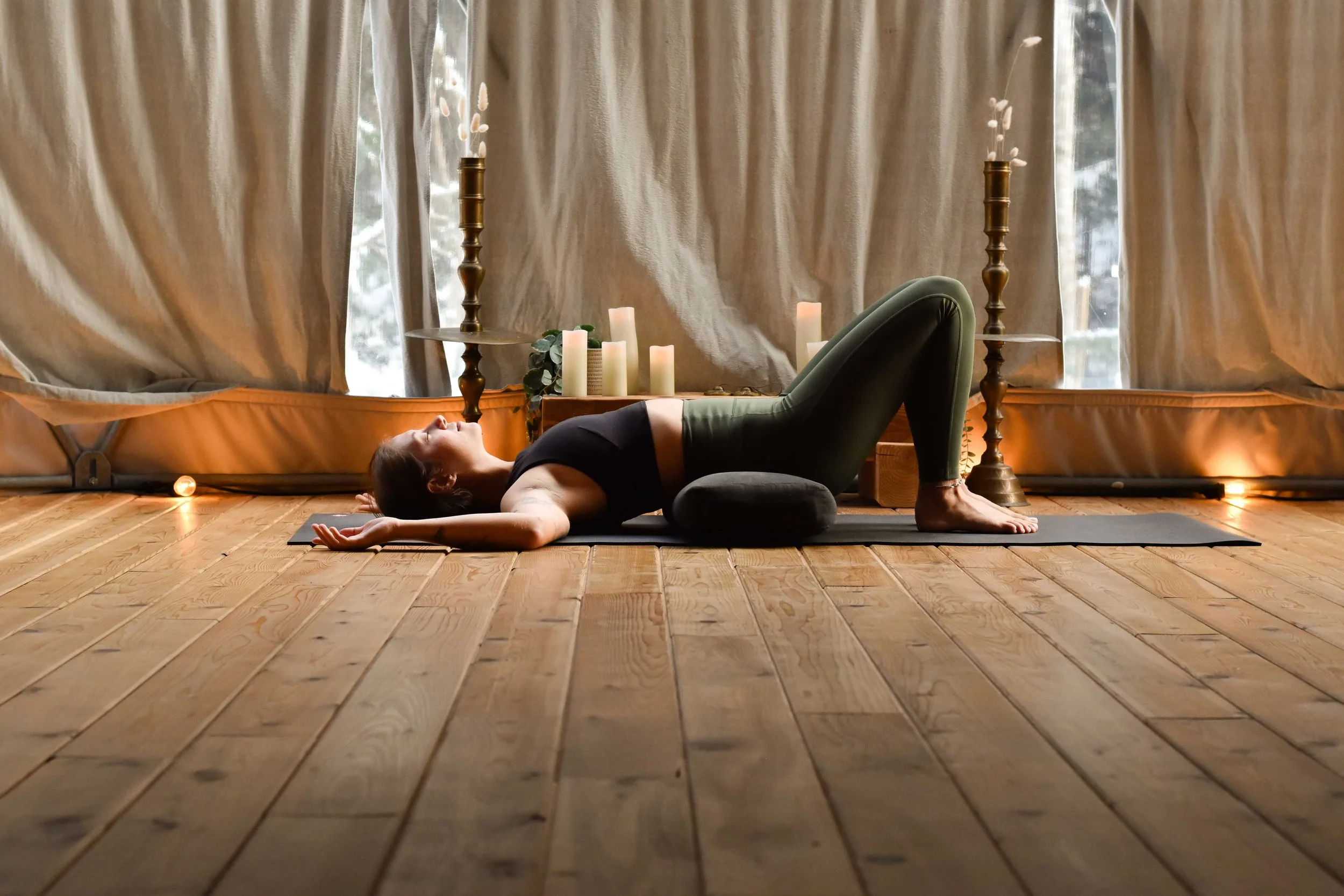
Supported Bridge Pose (Setu Bandhasana) with a Block
Why it matters:
A low, supported backbend gently opens the chest and hip flexors, signalling safety to the nervous system. Many people notice longer exhalations within a minute, which is a sign of parasympathetic engagement.
How to practise:
Lie on your back, knees bent, feet hip width.
Place a block under the sacrum on the lowest or middle height.
Rest arms by your sides, palms open.
Breathe in for 4 counts and out for 6 counts for 1–3 minutes.
Lift the hips to remove the block, lower slowly, pause for three breaths.
Self accountability cue:
Name one pattern that keeps you braced. Write one sentence that replaces bracing with a concrete action next time.
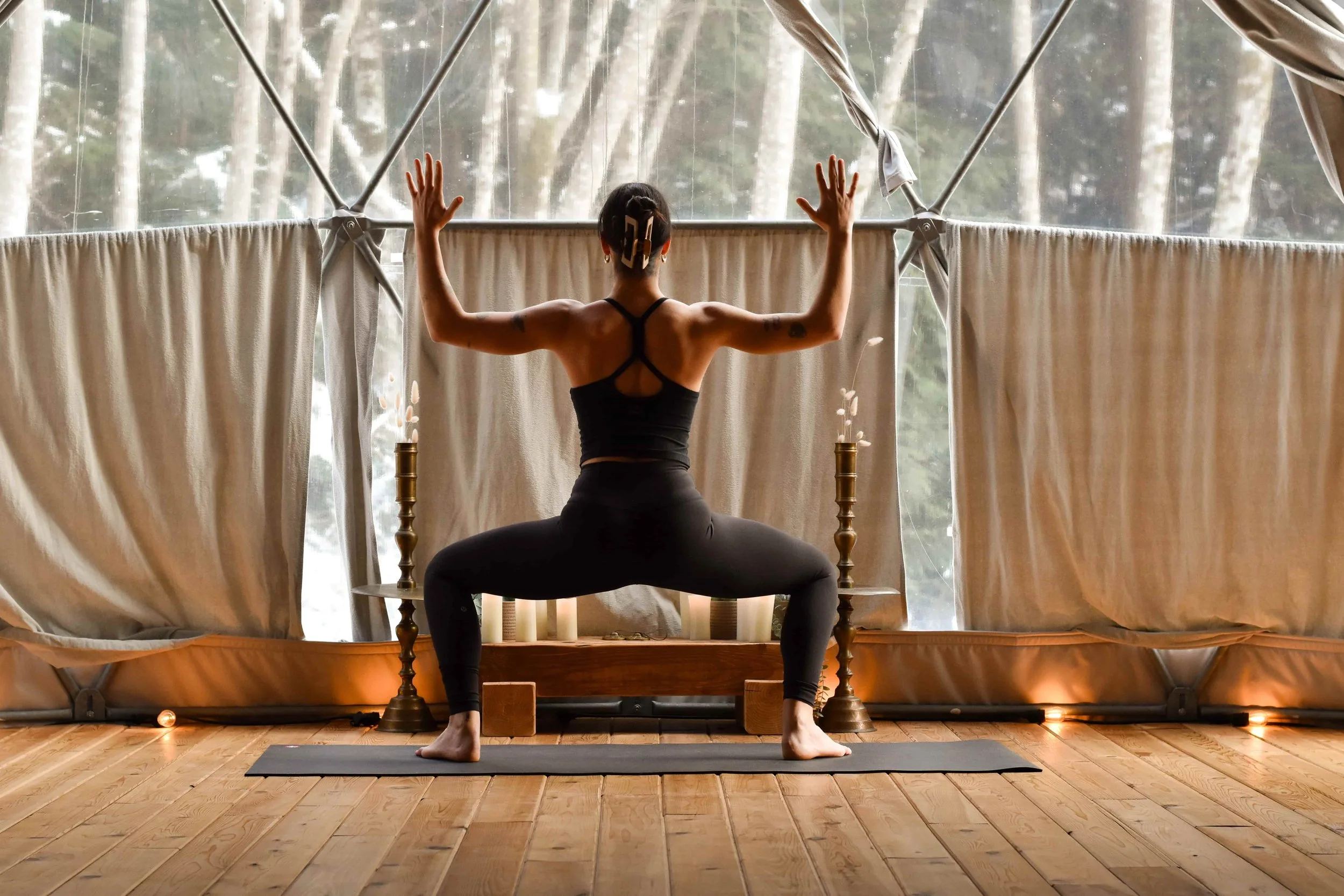
Goddess Pose to 5-Pointed Star (Utkata Konasana to Utthita Tadasana)
Why it matters:
This cycle trains gathered strength that can expand without wobbliness or collapse. It builds leg strength, focus, and a sense of choice under load.

How to practise:
Step wide. Turn toes out. Bend knees for Goddess. Spine tall.
Inhale to rise into 5-Pointed Star, arms wide, ribs quiet.
Exhale to return to Goddess.
Repeat 6–10 cycles. Match movement to breath.
Self accountability cue:
Choose one boundary sentence you will use this month. Practise saying it out loud in the rise to Star.
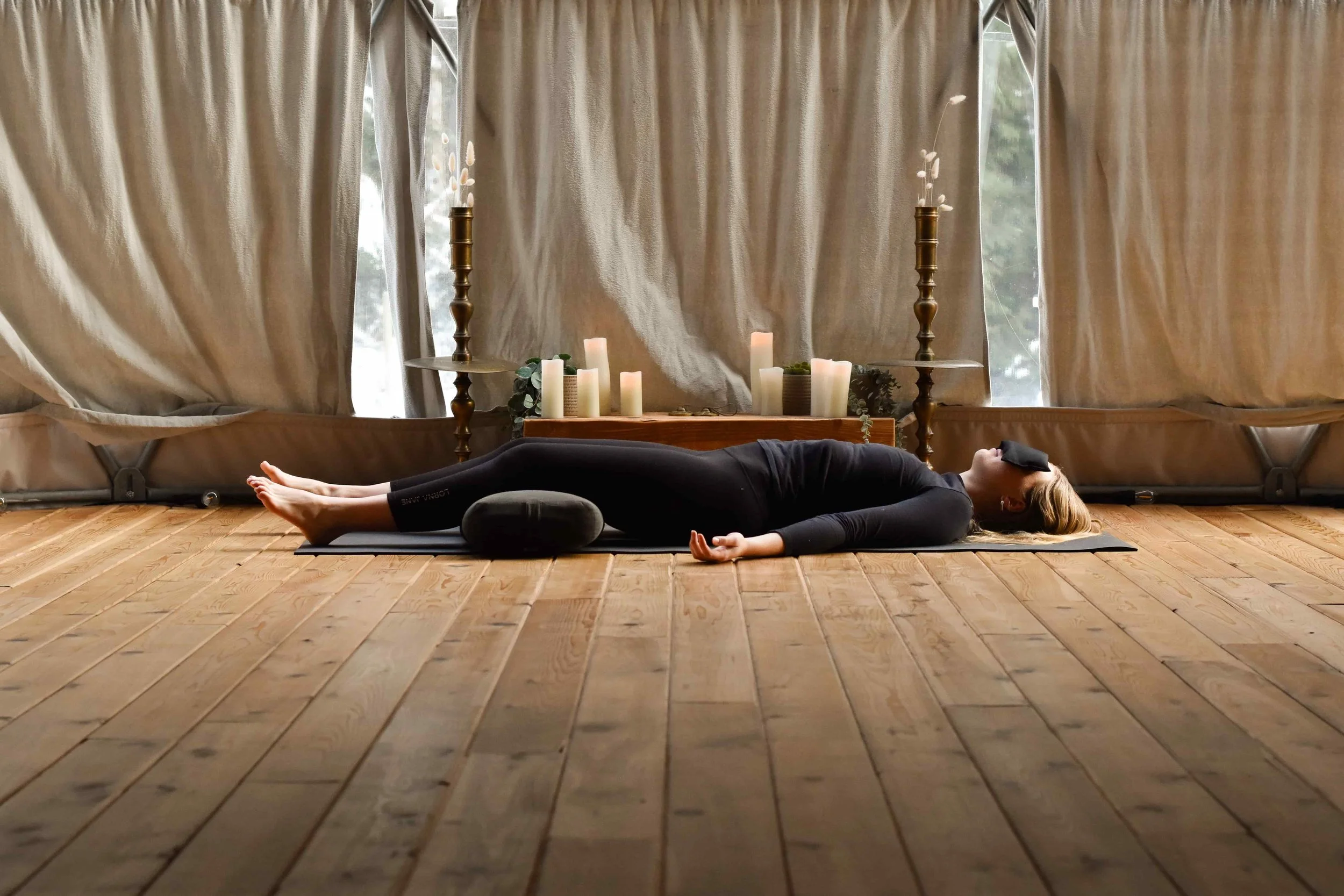
Corpse Pose (Savasana)
Why it matters:
Savasana is integration. It gives the system time to consolidate change. Closure is a skill.
How to practise:
Lie on your back. Support knees with a bolster or rolled blanket.
Soften the jaw and eyes.
Rest 3–7 minutes. Let the breath be natural.
Self accountability cue:
Before you sit up, decide the smallest repeatable action you will keep in the next seven days. Write it down.
Reflective Journaling for Resilience Building
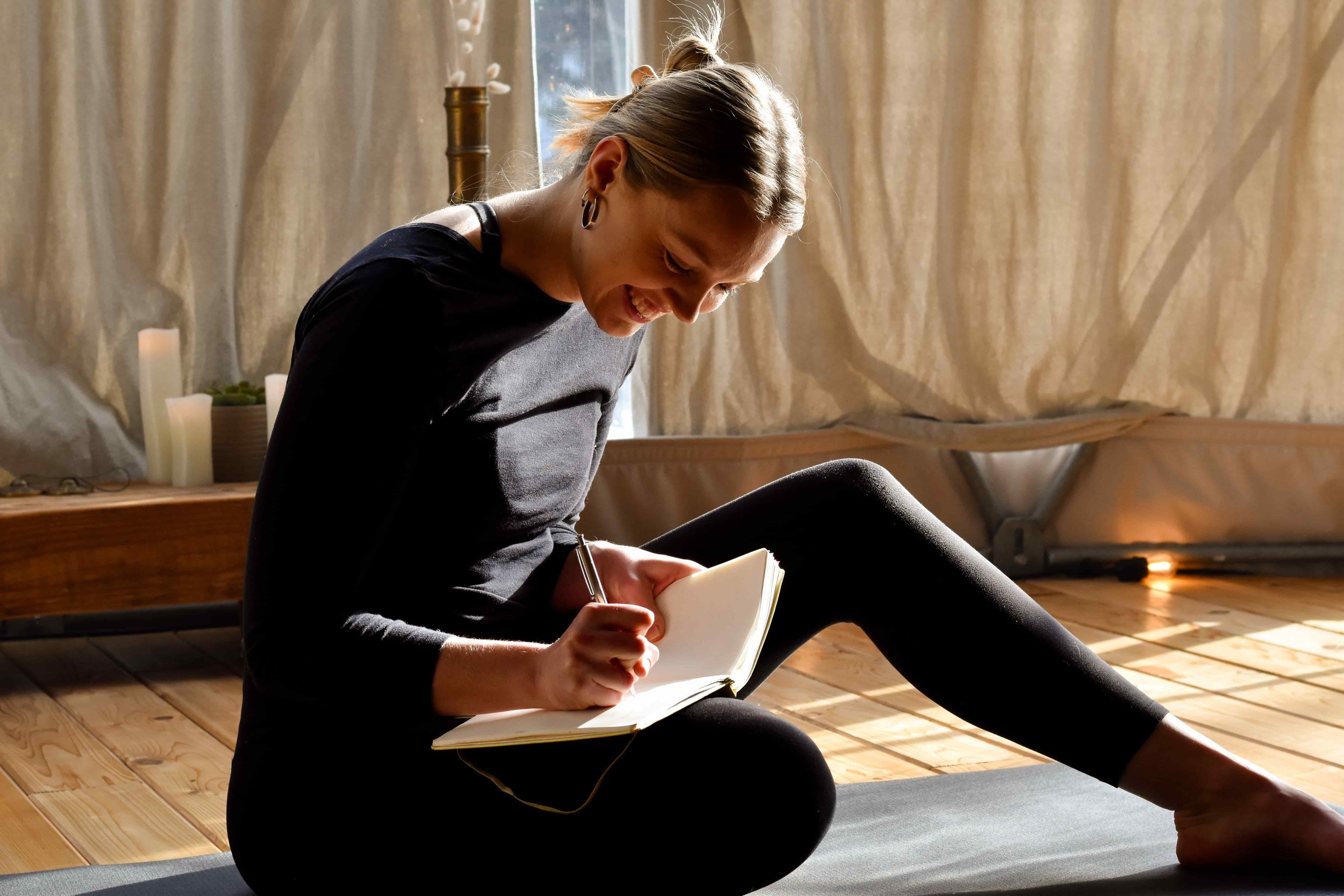
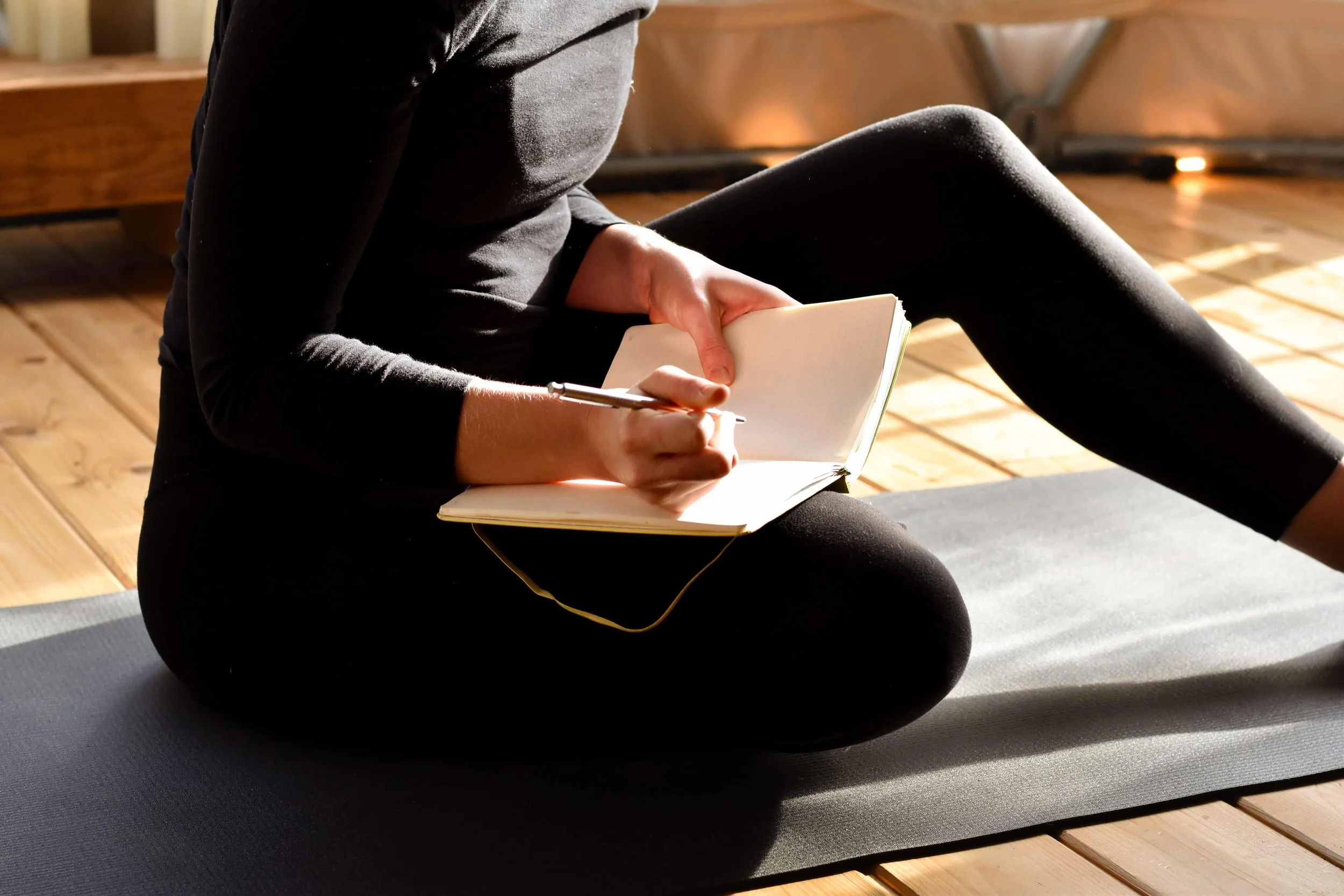
Set a timer for 10–15 minutes. Breathe in for 4 counts and out for 6 counts for one minute. Then write without editing.
Journaling Prompts for Building Resilience:
One moment this year where I bent without breaking looked like…
A place I leaked energy looked like… The cost was…
The skill that helped me regulate was… I will keep it by doing it on… at… for…
A boundary I will honour next time sounds like…
Before the year turns, I release… and I choose…
Close by reading your page out loud to yourself. Hearing your own words builds accountability.
A 12-Minute Protocol For Building Resilience
Minute 0–1: Breathe: 4 seconds in, 6 seconds out.
Minutes 1–4: Supported Bridge with 4–6 breath.
Minutes 4–7: Goddess to Star, 6–10 cycles.
Minutes 7–10: Savasana.
Minutes 10–12: One prompt, one commitment.
Carry It Into Daily Life
Pick one cue. For example, place your yoga block on your desk every Monday as a visual reminder. When you see it, do five slow breaths before your next task. Track completion once per week for the rest of December. Stay gentle yet honest.


About Nectar Yoga Retreat
Set beneath towering conifers on Bowen Island, Nectar offers 2-night Experience Packages consisting of restful stays, nourishing vegetarian breakfasts, and daily guided yoga and meditation. We also offer yoga and meditation retreats, and instructional time offered by leading spiritual and wellness teachers. Together with our sister brand, Mist Thermal, we welcome guests from Vancouver, Victoria, Seattle, and beyond to experience renewal and a steady relationship with practice.
Works Cited
https://www.frontiersin.org/journals/human-neuroscience/articles/10.3389/fnhum.2018.00397/full
https://www.sciencedirect.com/science/article/pii/S0306987706001666
https://www.health.harvard.edu/staying-healthy/yoga-for-better-mental-health
Disclaimer: The practices in this post are for information only and are not a substitute for medical advice. Please consult a healthcare provider before beginning any new wellness routine, especially if you are pregnant, have health concerns, or physical limitations. Participation is voluntary and at your own risk.